
Arrest Warrants in Uintah County
Utah Rule 6 sets the default path. After a charging document, a court usually schedules an initial appearance and issues a summons instead of sending officers. A judge can still issue an arrest warrant, though. The rule lists the triggers: an unknown address, a person unlikely to show up on a summons, or a finding of substantial danger. Probable cause must back the request. Once a Uintah County judge signs, the warrant carries the appearance and release terms. The Uintah County Attorney prepares charges, affidavits, and bail recommendations, but only the court issues the order.
Uintah County Arrest-Warrant Path
Here is how a Uintah County arrest warrant travels. A charging document and its supporting papers reach a judge, who picks a summons or a warrant under Rule 6. The clerk then enters the order into the court system, and that data can flow into the Utah Statewide Warrants file. Service depends on the matter. Vernal Police, Naples Police, or the Uintah County Sheriff may carry it out. For the current order and any release condition, the issuing court remains the source.
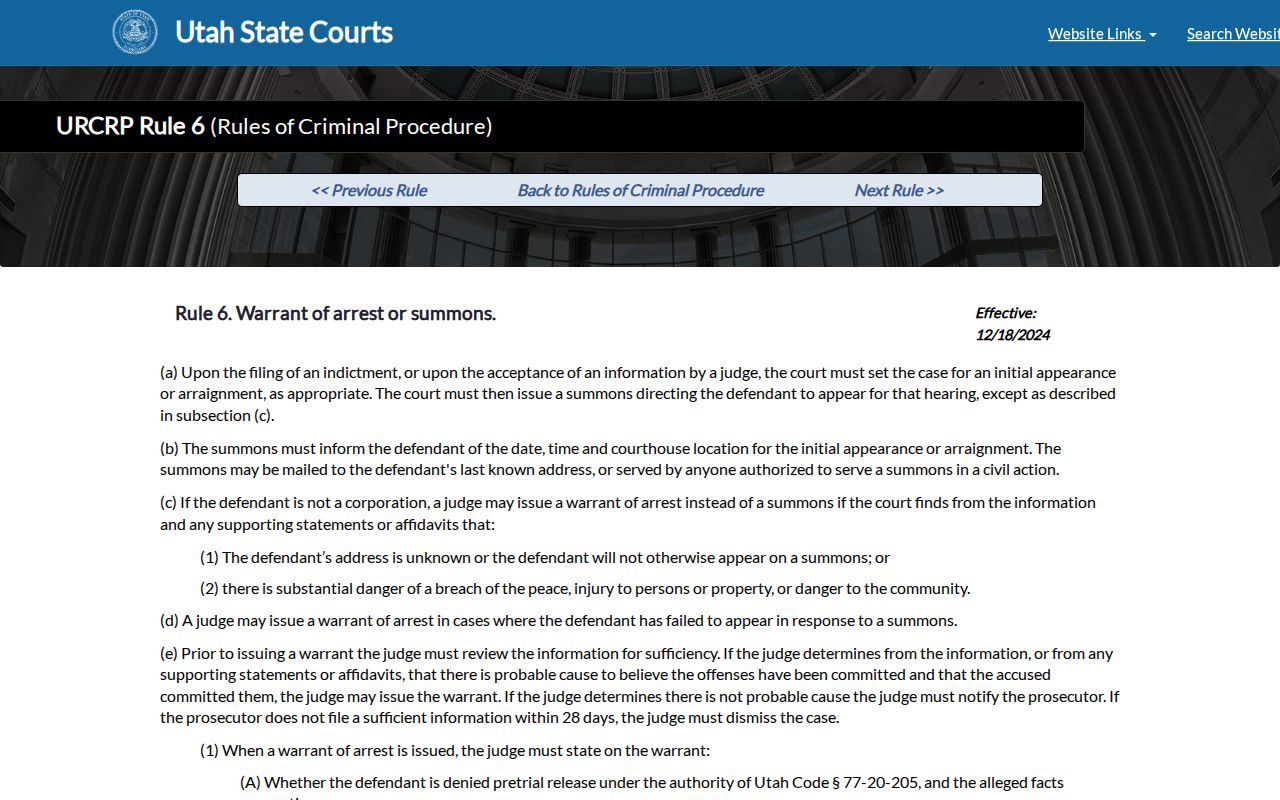
Rule 6 distinguishes the summons route from a judicial arrest warrant.
What a Uintah County Arrest Warrant Contains
Utah's public records can show the court, the case number, the warrant type, when it issued, and any release or appearance terms. The statewide portal does not publish a confirmed set of public result fields, and Uintah County uses no local warrant-number format. The docket and the clerk hold the current record.
| Case number | Court-issued number helps identify the public docket; no local number pattern was documented. |
|---|---|
| Person match | Confirm through the court’s identity process; a name alone may be ambiguous. |
| Charge or event | A public charging document or docket entry may describe the case. |
| Issuing judge or court | Shows which court controls the warrant and appearance terms. |
| Release terms | Ask the issuing court about current conditions; no countywide bond schedule was found. |
| Date and status | Verify the latest docket entry, service return, recall, or other court action. |
Uintah County Arrest-Warrant Record Fields
Rule 6 spells out what a warrant must say. It states whether pretrial release is denied, what conditions the court sets, whether monetary bail applies, and whether personal appearance is required. A public case file in Uintah County still may not show every affidavit or personal identifier. Ask for a supporting affidavit and the court may apply sealing and access rules. Utah Rule 40 covers the separate search-warrant process, including its return and sealing. One caution: an internal law-enforcement field is never a public search result.
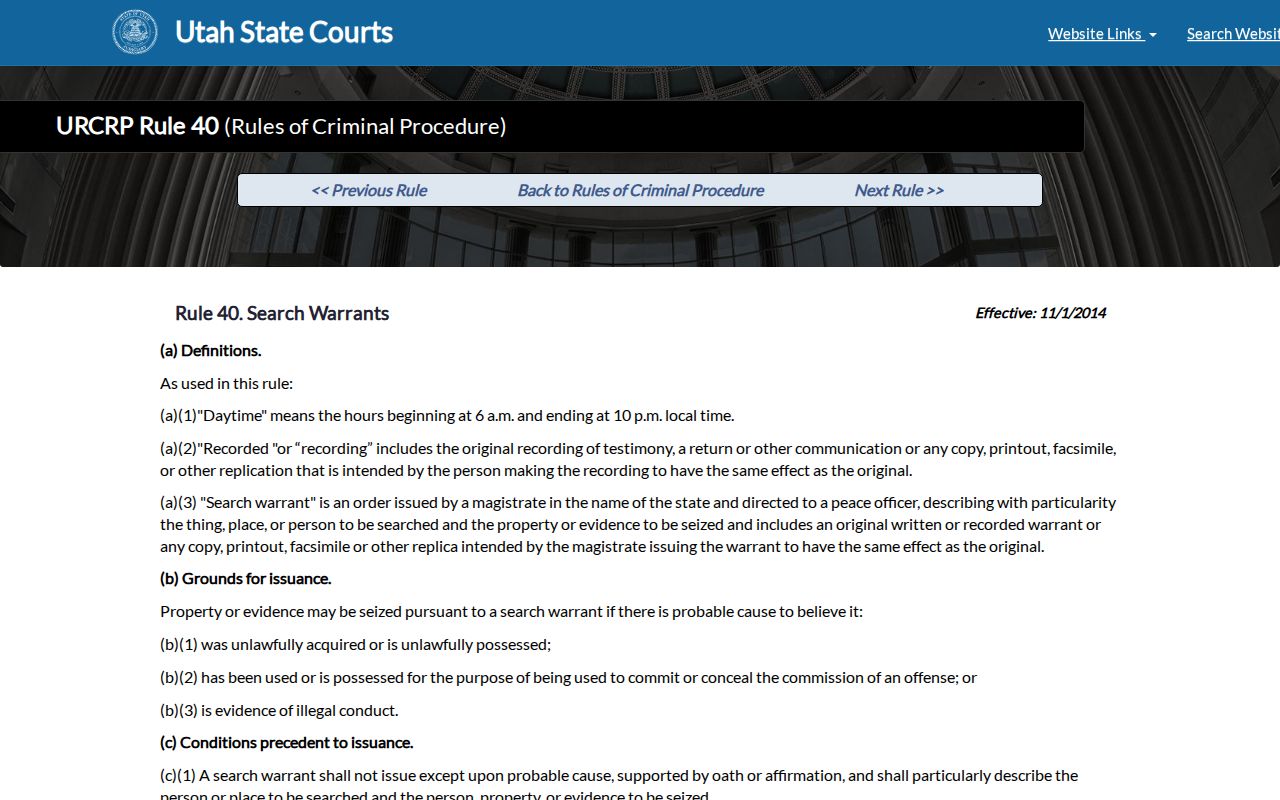
Rule 40 governs searches and seizures, not a public roster of Uintah County residents with arrest warrants.
How Uintah County Arrest Warrants Are Served
Under Rule 6, a peace officer serves a warrant and may execute it anywhere in Utah, then makes a return to the court. Uintah County sheriff's deputies, Vernal Police, and Naples Police all do this work, and each keeps its own incident, transport, and booking records. After an arrest, the court takes over appearance and release review. The Uintah County Jail answers custody questions only, not recall or court status. No local surrender calendar, bond window, or arrest-warrant roster exists here.
Uintah County Warrant Service Is Agency Work
Serving a warrant creates paper, but not in one place. The court makes the judicial record, an officer executes the order and reports back, and each file sits with a different Uintah County office. A police incident report, a sheriff's service return, a jail booking entry, and the court docket are separate records. So name the office. Use the Sheriff's GRAMA route for county agency records, the Vernal City request form for a Vernal police report, and the issuing clerk for the judicial order. A general request to the county Clerk/Auditor will not reach the right desk.
Utah Courts' Eighth District page maps the court system; its clerk verifies any Uintah County district case.
Arrest Warrant vs Summons vs Bench Warrant
The three tools do different jobs. A summons orders a person to appear; an arrest warrant lets an officer take that person into custody; a bench warrant can follow a missed court date. Utah Rule 6 governs arrest warrants and summonses, while Rule 4B handles citation nonappearance. For the justice-court route, see Uintah County bench-warrant details.
| Feature | Arrest Warrant | Summons | Bench Warrant |
|---|---|---|---|
| What it orders | Custody and a court appearance. | Appear at a stated hearing. | Arrest after a missed court duty. |
| Basis | Judicial probable-cause review under Rule 6. | Charging document with an appearance date. | Failure to appear when required. |
| Who issues it | Judge. | Court after filing. | Court handling the case. |
| Next step | Ask counsel and the court about release terms. | Attend or contact the court as directed. | Ask the issuing clerk about the required response. |
Uintah County Search Warrant Records Differ
A search warrant is not an arrest warrant. It authorizes searching a place or seizing an item, not taking a person into custody. Utah Rule 40 demands sworn probable cause and particularity, and it allows sealing or other limits on public access. A search-warrant affidavit may stay closed for a while. So split your questions. For a person's arrest status in Uintah County, start with BCI and the issuing court; for a search-warrant document, ask the court what public or unsealed portion it can release. Neither process settles guilt.
Federal Warrant Records Need PACER
Vernal hosts a federal court facility, and the U.S. Marshals page describes VFAST coordination with local partners. That is a working relationship between agencies, not a public list of federal warrants. Uintah County has no public fugitive roster either. For federal case records, use the PACER Case Locator, and take a live federal warrant question to the federal court or the U.S. Marshals. A federal case tied to Vernal does not become a Utah Statewide Warrants entry.
What to Do About a Warrant
A BCI check is a smart first step. After that, call the issuing court or talk with a lawyer about the warrant's current status, release conditions, and whether Uintah County requires you to appear. The county publishes no walk-in surrender protocol and no standard bond amount. A GRAMA request cannot clear the order. If the court recalls or quashes the warrant, ask for a docket entry or written order. Then confirm the statewide record was updated. For service, transport, or custody questions, call the agency or jail that holds that information.
Important: Before you appear or surrender, ask counsel and the issuing court about the safest procedure, release terms, and the next hearing.